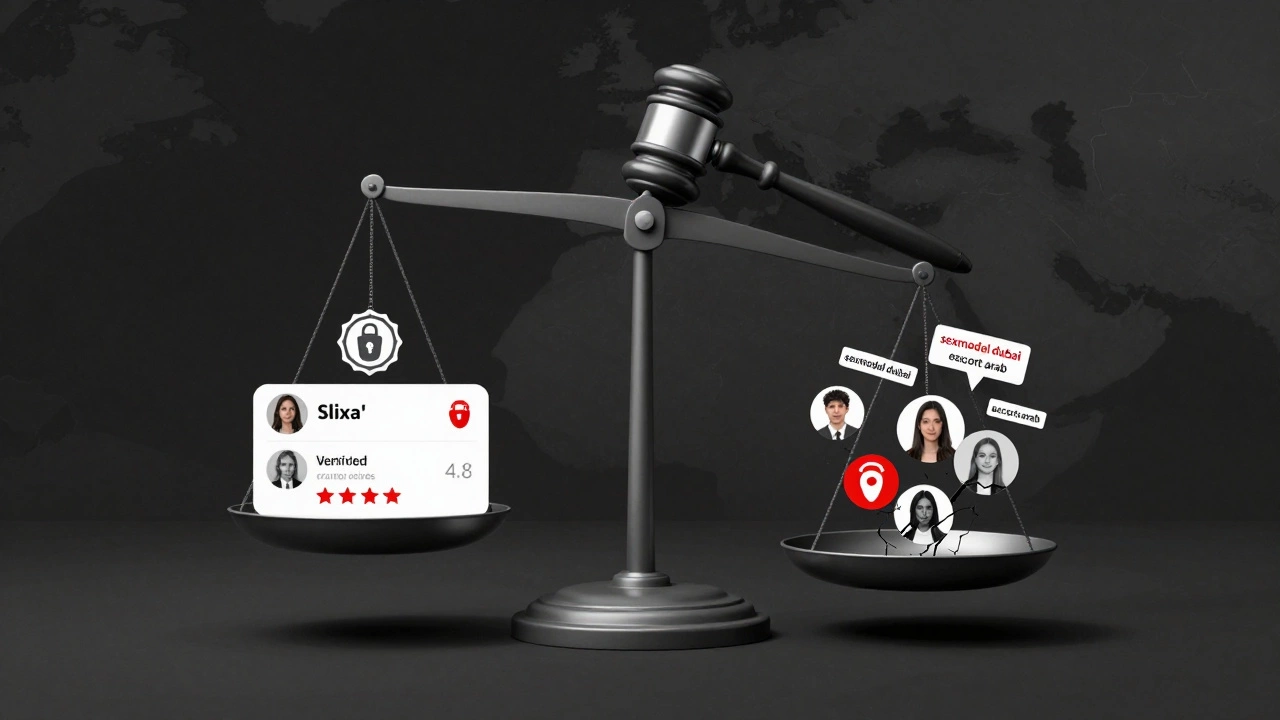
Slixa, the UK-based dating app known for its strict safety protocols and verified user profiles, has filed a federal lawsuit against Cityvibe, a competing platform based in Dubai, alleging widespread copying of its user interface, algorithm logic, and data collection methods. The suit, filed in the Northern District of California, claims Cityvibe replicated Slixa’s signature swipe-to-match design, real-time location tagging, and even its unique ‘Trust Score’ verification system - all without permission. This isn’t just about aesthetics; it’s about user trust. Slixa built its reputation on keeping people safe, and now users are being funneled into an unregulated environment where identity verification is minimal and reports of harassment have surged. For those looking for connections in regions with looser oversight, some turn to services like dubai escorte, but those platforms operate outside the legal frameworks Slixa adheres to - and that’s exactly what this lawsuit is trying to stop.
Cityvibe launched in early 2024 with a flashy marketing campaign targeting expats and tourists in the Middle East. Its app, nearly identical in layout to Slixa’s, uses the same color scheme, button placements, and even the same animation for profile cards. Internal documents obtained by Slixa’s legal team show Cityvibe’s developers referenced Slixa’s public GitHub repositories and YouTube tutorials to reverse-engineer core features. One email chain, dated March 17, 2024, shows a Cityvibe engineer writing: "We don’t need to reinvent the wheel - just copy the parts that work." Slixa’s engineers confirmed that the code structure in Cityvibe’s Android and iOS apps matches their own down to variable names and error-handling routines.
What’s at stake beyond the code?
Beyond the copied interface, Slixa accuses Cityvibe of harvesting user data in ways that violate GDPR and California’s CCPA. Slixa only collects location data with explicit, granular consent and deletes it after 72 hours unless the user opts in to longer storage. Cityvibe, by contrast, tracks users continuously, even when the app is closed, and sells anonymized behavioral data to third-party advertisers - including firms linked to targeted marketing for adult services. That’s where the keyword sexmodel dubai comes in. While Slixa bans any mention of paid companionship or sexual services in profiles, Cityvibe’s moderation system allows posts with phrases like "private meeting," "discreet encounter," and even direct references to escort arab - all while claiming to be a "social connection" platform. This contradiction is central to Slixa’s argument: Cityvibe isn’t just copying design - it’s exploiting a legal gray zone to profit from content Slixa actively filters out.
Legal precedent and industry reaction
This isn’t the first time a tech company has faced a copycat lawsuit, but it’s one of the first to focus on behavioral and data practices as part of intellectual property infringement. In 2022, Tinder won a similar case against a clone app in Brazil, but that was limited to UI and logo similarity. Slixa’s case expands the definition of trade secrets to include user interaction patterns and safety protocols. Legal analysts say the outcome could set a new standard for how dating apps protect their ecosystems. The European Data Protection Board has already requested access to Cityvibe’s data logs, and Apple and Google have both flagged the app for review under their policies on deceptive design.
Industry insiders are watching closely. One former product lead at a major dating app, who spoke on condition of anonymity, said: "We’ve all seen knockoffs. But when a company starts copying your safety features - that’s when you know they’re not just trying to compete. They’re trying to replace your credibility." Slixa has over 3.2 million active users globally, with 42% based in Europe. Cityvibe claims 1.8 million downloads, mostly from the UAE, Saudi Arabia, and Qatar. The gap in user trust is stark: Slixa has a 4.8-star rating on the App Store based on 180,000 reviews. Cityvibe sits at 2.9 stars, with hundreds of comments mentioning unverified profiles, fake photos, and unresponsive support.

What users should do now
If you’re using Cityvibe, here’s what you need to know. First, check your privacy settings. If location tracking is always on, turn it off. Second, review your profile history - if you’ve uploaded photos or written anything that could be used to identify you, consider deleting your account. Third, report any suspicious behavior directly to your local authorities. Cityvibe doesn’t have a reliable reporting system, and many users have reported being blocked after flagging harassment.
Slixa has released a free tool called "App Health Check" that scans your device for apps mimicking its interface. It’s available on their website and works on both iOS and Android. The tool flags apps that use identical swipe gestures, color codes, or profile layout structures. So far, it’s identified over 120 clones worldwide, including one called "DubaiDate" that uses the same font and icon set as Slixa but redirects users to third-party chat services with no moderation.
The bigger picture
This lawsuit isn’t just about two apps. It’s about the future of digital intimacy. As more people turn to apps to meet others, especially in regions with limited social freedoms, the responsibility to protect users grows. Companies that prioritize profit over safety aren’t just breaking rules - they’re eroding the trust that makes these platforms viable. Slixa’s fight is about holding them accountable. If they win, it could force other apps to rethink how they build features, handle data, and enforce community standards. If they lose, it opens the door for more clones to operate with impunity, putting millions of users at risk.
For now, Slixa is asking the court to force Cityvibe to stop all operations in the EU and US, destroy all copied code, and pay damages equal to the revenue generated from infringing features. The trial is set to begin in April 2026. In the meantime, users are encouraged to stick with platforms that have transparent policies, real human moderation, and a track record of protecting privacy - not just copying what works.